
Projects succeed or fail based on how well people align with the project's goals.
A company once rolled out a Balanced Scorecard, with clearly defined KPIs, to bring transparency to sales performance. On paper, it should have worked. In practice, the sales team quietly resisted — not because they disagreed with the metrics, but because the scorecard asked them to expose something they'd never had to share: their personal networks, the relationships that made their numbers possible in the first place. Nobody said no outright. The data just never quite made it in.
Apply that same logic to an AI rollout designed primarily to extract know-how. Will long-serving employees freely share the expertise and relationships they've built over years, if the likely reward is becoming dispensable?
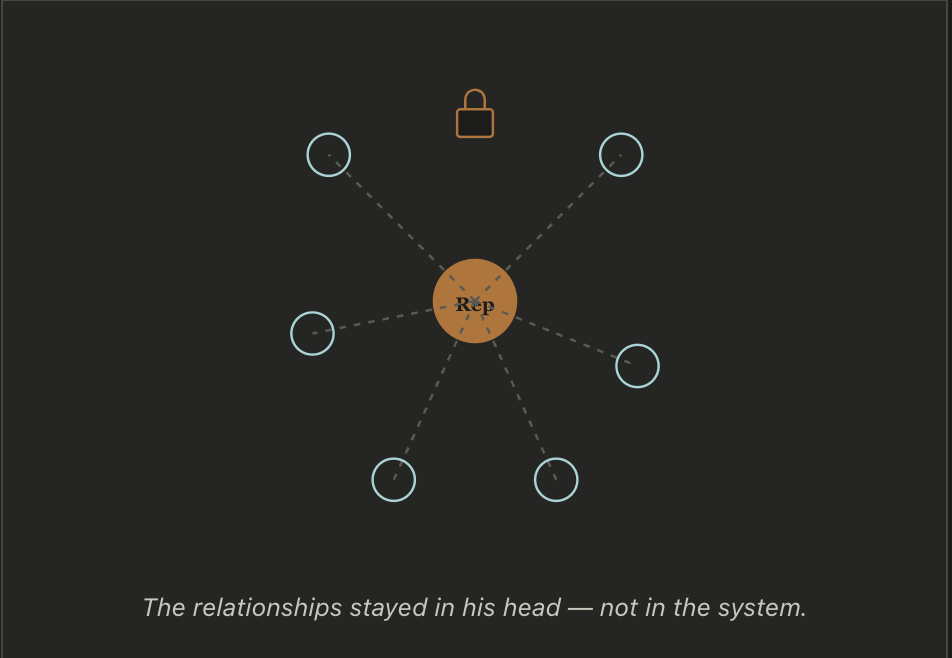
Five patterns that shaped everything we've built.
The same issues surface, again and again, regardless of sector or size.

That's what a mid-sized firm loses annually to knowledge that already exists somewhere in the organisation, just not anywhere anyone can find it. It works out to 5.3 hours per employee, per week, roughly €27,560 per consultant, per year.
"It's the difference between losing €100 a month, and losing €100 a month plus every year of compound interest it would have earned."
Most firms only ever see the first number. Knowledge, like money, compounds, and most firms are losing more of it than they realise.
It's also why our Knowledge Exchange Mechanism is built on exponential reciprocity, not equal exchange. Share a fragment of what you know, and what comes back- access to everyone else's expertise, tools, recognition, has to be worth far more than what you gave. Anything less, and knowledge simply won't move.
Getting people and process right, before technology.
When we led one of the first sustainable digital transformation programmes at a major renewable energy company, we began with a non-negotiable foundation: a set of Principles, aligned with the company's own values, that every stakeholder committed to upfront. Those Principles became our compass, ensuring the roadmap always pointed to "true north," to borrow Stephen R. Covey's phrase.
This is the philosophy behind HumAInity Works. We deliver ethical, people-first AI rollouts that create value for everyone involved, time savings, productivity gains, and the capacity to do more with less risk.
Here's the commercial consequence of everything above. Because knowledge leaks the way it does, most Professional Service Firms are still billing time for work that could be billing IP, recreating the same analysis, the same proposals, the same expertise, engagement after engagement, at the same cost each time. The successful firm of the future doesn't bill more hours. It bills the intellectual property those hours used to be spent recreating.
What billing IP looks like in practice.
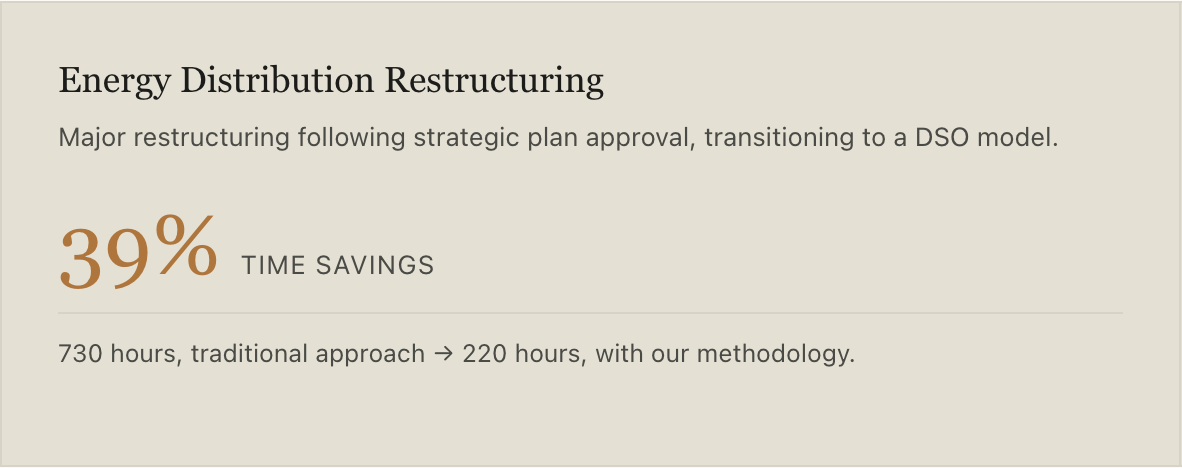
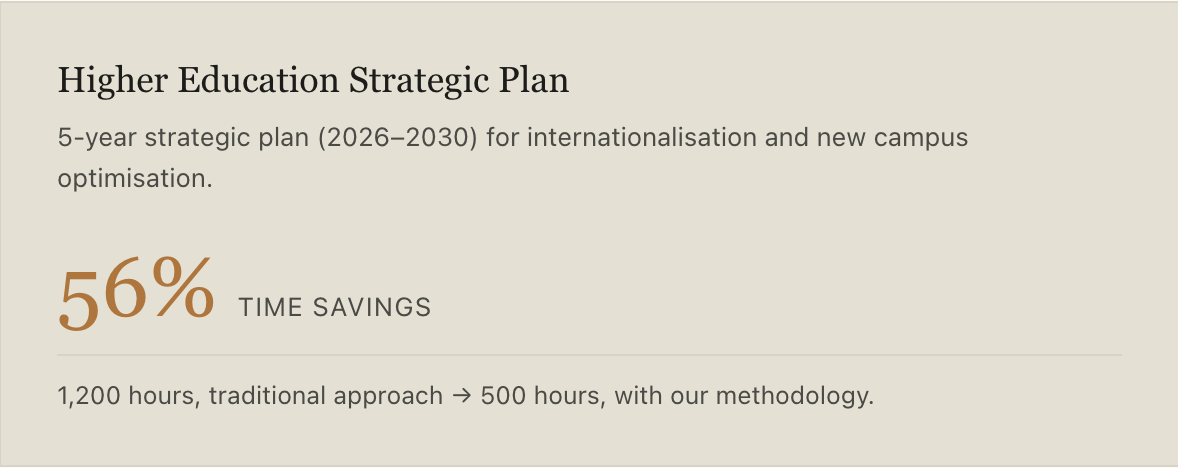
Getting people and process right, before technology.
Leonardo da Vinci's greatest inventions weren't born from abstraction — they were modelled on nature. He studied the flight of birds to design flying machines, the anatomy of humans to engineer tools.
We've followed a similar path. Transformation, like biology, isn't linear. It's adaptive, resilient, and deeply human.
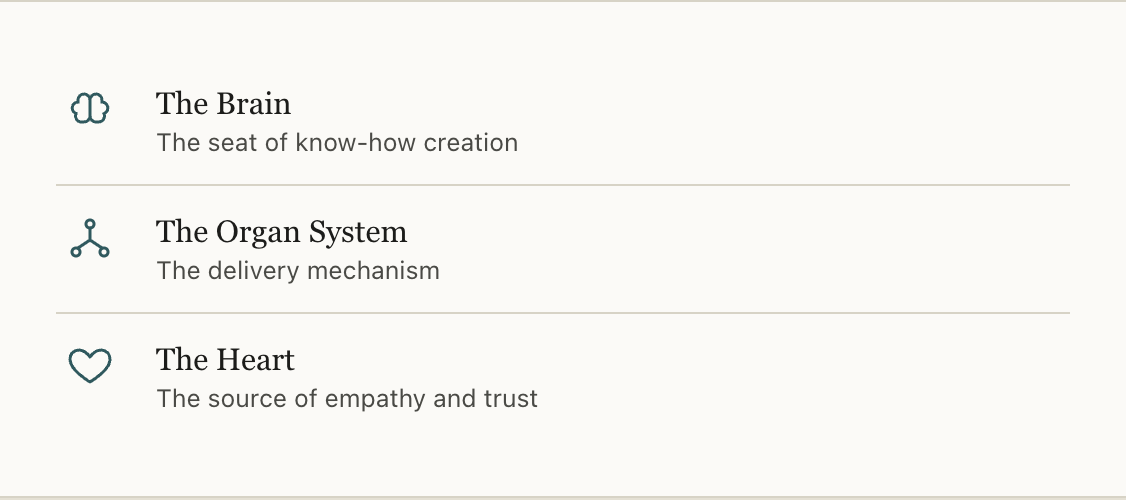
Not by extracting knowledge from people, by building a system
where sharing it makes everyone more valuable, not less.
We don't just implement systems. We help people thrive.
David Galea and Mark Kane, Co-Founders, HumAInity Works